
Are Covid-19 Vaccines Safe For Pregnant And Lactating Women of Pakistan? A Comprehensive Report
Saniya Hassan , Tajwar Nihal Hashmi
2nd Year MBBS, Islamabad Medical and Dental College, Islamabad Pakistan
Key Points
- Who declared covid-19 as pandemic on 11th march, 2020
- There is increased risk of adverse effects of covid-19 in pregnant patients
- Vaccines have been deemed safe for pregnant patients
The World Health Organization (WHO) declared COVID-19 as a pandemic on the 11th of March 20201 and since then almost 224 million cases have been reported worldwide with 4.6 million deaths2. In Pakistan, there have been 1.2 million cases thus far with more than 26,580 deaths3. The malady imposed economic turmoil in addition to threatening health globally but its threat was doubly significant in Pakistan because of its status as a developing nation with limited resources4, 5.This pattern is mirrored in the pregnant population as COVID-19 has been linked to elevating the severity of the disease in pregnant individuals6, 7, especially those with underlying comorbidities, with pregnant people having COVID being more likely to die, as well as experiencing an increased risk of adverse pregnancy outcomes8. This is an issue ubiquitously but especially in Pakistan due to its long-standing history of having a disproportionately high maternal mortality rate owed to a lack of education and healthcare resources among other reasons9 (with the current rate being estimated at 186 deaths per 100,000 live births). Fortunately, when given adequate care, materno-fetal outcomes are usually good10 but the overburdening of the healthcare system may exacerbate the mortality rate especially considering that the amount of pregnant COVID patients is only escalating following the first case that was reported in 2020. Although details of specific instances of pregnancy with COVID in Pakistan is scanty, atleast one case of miscarriage in the first trimester has been documented in detail11 and 2 deaths of females with late-stage pregnancies recieved national media coverage. With the alarming frequency of infection as well as additional variants emerging, vaccination becomes imperative for the general population but especially for vulnerable sects like pregnant and lactating women.12
In Pakistan, about 66.4 million doses have been administered and 21.3 million individuals are fully vaccinated13, with the number of doses administered to pregnant women remaining unclear. The important question of the safety and efficacy of COVID vaccines in the pregnant and lactating population arises because this high risk group was excluded from all clinical trials during vaccine development and authorisation14. Nevertheless, this article aims to concisely present the available data regarding vaccination in pregnancy so that Pakistani women can receive evidence-based counselling. An overview of the available vaccines is as follows; 3 main types of COVID vaccines have been developed and are being used worldwide including mRNA vaccines (Pfizer, Moderna), viral vector vaccines (AstraZeneca, SputnikV, J&J) and inactivated whole virus vaccines (SinoPharm, SinoVac)15. In general, vaccines have been deemed safe for pregnant individuals16 and are discussed separately below.
mRNA Vaccines:
1. Pfizer: The Pfizer-BioNTech vaccine is one of the two mRNA vaccines currently in use. These utilize a lipid nanoparticle to enclose the mRNA that encodes for the SARS-CoV-2 spike protein, which is then delivered to a cell’s cytoplasm where its cellular machinery generates the viral protein which triggers an appropriate immune response when introduced to lymphocytes. Pfizer is shown to be 95% effective in phase 3 clinical trials15 and has received FDA authorisation for non-pregnant people aged 12 years or above and pregnant individuals, aged 18 and above17, 18. A breakdown of the available data with regards to its use in pregnant and lactating women is as follows:
A study included in the American Journal of Obstetrics and Gynaecology, featuring 131 women of reproductive age, aimed to quantitatively contrast the potency and safety of mRNA vaccines. The vaccine response in pregnant and lactating women was compared with that of non-pregnant uninfected women (control group) as well as pregnant women that had naturally acquired the virus. Titers were compared in serum and breastmilk for SARS-CoV-2 spike proteins and IgA, IgM, IgG receptor binding domains. Results showed that vaccine induced antibody titers were identical in pregnant and lactating women when compared with the control group, while they were considerably higher than pregnant women that were naturally infected with COVID-19.19
Pre-partum mRNA vaccination using the Pfizer vaccine also showed antenatal immunization against COVID-19 as SARS-CoV-2 antibodies travelled from the maternal serum to the fetus via the transplacental route.20
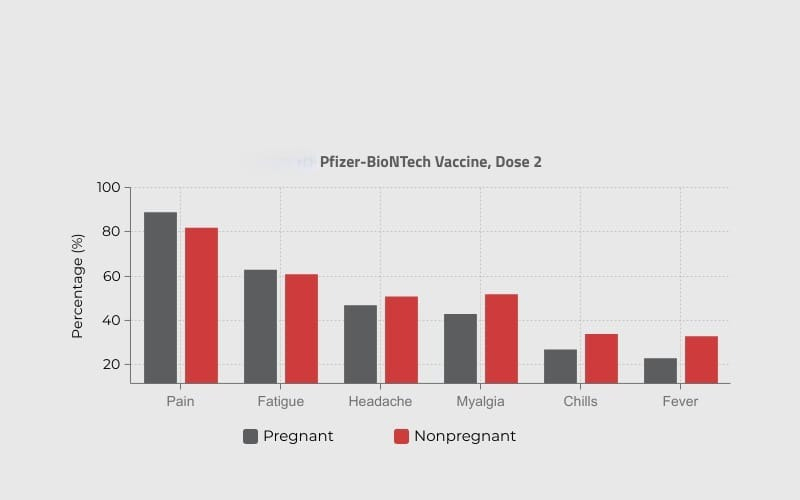
Another study published in the New England Journal of Medicine evaluated immunogenicity and reactogenicity profiles through the V-Safe vaccine registry in which participants self-reported symptoms after mRNA vaccine administration as well as pregnancy outcomes. Reported reactions and
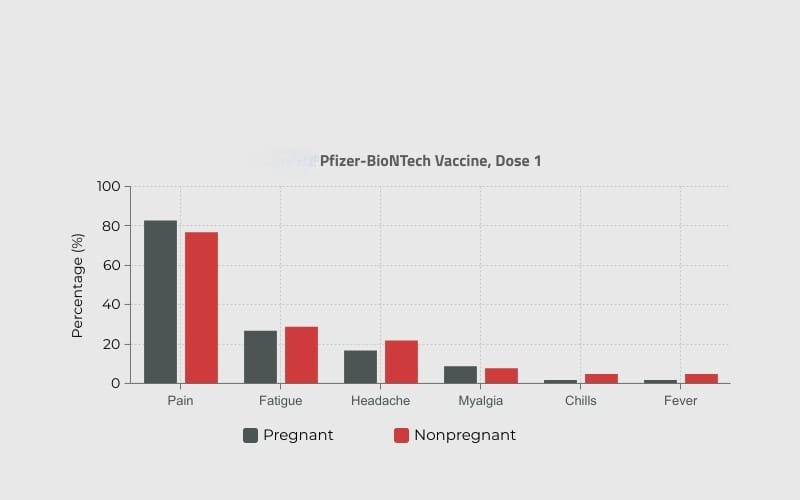
Figure 2 Pfizer dose 121
adverse pregnancy outcomes to the vaccine were similar among pregnant and non-pregnant women21. The results of this study are further discussed and illustrated in the section on Moderna, with a comparison of the reported symptoms of pregnant and non-pregnant women being represented below:
In a large retrospective cohort study, a statistically significant association between Pfizer vaccine administration and a lower risk of SARS-CoV-2 infection in pregnant women was found.22
Furthermore, human studies of mRNA vaccines developed for other viruses like Influenza, Rabies, Zika show that these are safe for pregnant individuals15, 23. Perhaps the strongest proponent for administration of vaccines is real world data as upwards of 185,000 pregnant people in the United States, Europe and Scotland have elected to be vaccinated without harm.58
The rest of this section will focus on data pertaining exclusively to lactation. In general, viral spike proteins, fragments of mRNA24 and PEG-200025 do not enter breastmilk and so infant exposure to these subsequent to maternal vaccination is not a concern.
In an 84-participant study, breast milk samples were collected a week before receiving the 1st dose of the Pfizer vaccine and then in the following weeks with an interval of seven days in between collection. IgA levels showed a documented increase from week 1
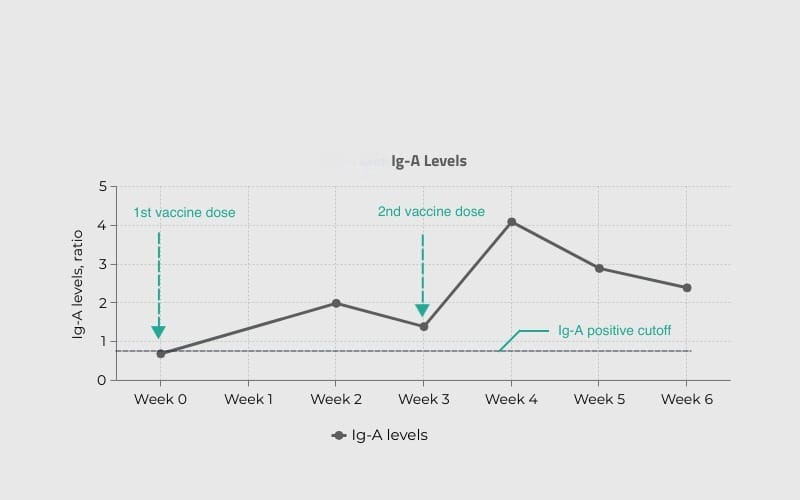
(61.8%) to week 4 (86.1%), with a relative decline (65.7%) at week 6, while IgG antibodies stayed low for the initial 3 weeks, burgeoning at week 4 (91.7%) and peaking at weeks 5 and 6 (97%)26. This is diagramatically presented below:
A study that measured different immunoglobulins showed no IgM antibodies in breastmilk even after the 2nd dose with IgG and IgA antibodies both peaking 7 days after the 2nd dose27, while another study that had some participants with low anti-COVID antibodies before the first dose detected antibodies in the breastmilk of all participants after vaccination with increased levels in the participants with antibody positive milk before vaccination.28Lastly, the findings of a 61 participant study revealed that 38.3% of milk samples could neutralise SARS-CoV-2 infectivity and secretory IgA was present in 15% of the breastmilk specimens. These outcomes were in conjunction with other previously discussed findings such as an increase in baseline antibodies following maternal vaccination in serum and breast milk of the individual.29
2. Moderna: This was the first vaccine to get the EU 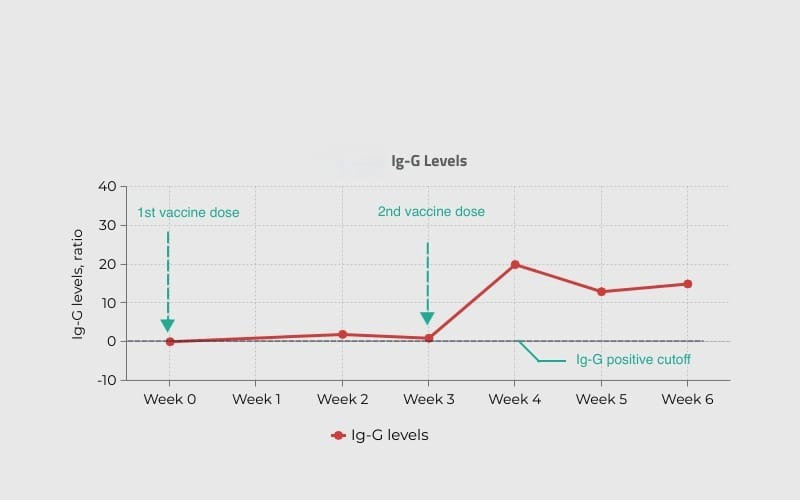
authorization by the FDA. It is also an mRNA vaccine with a reported efficacy of 94% and has been approved for people aged 18 years and above.30, 31
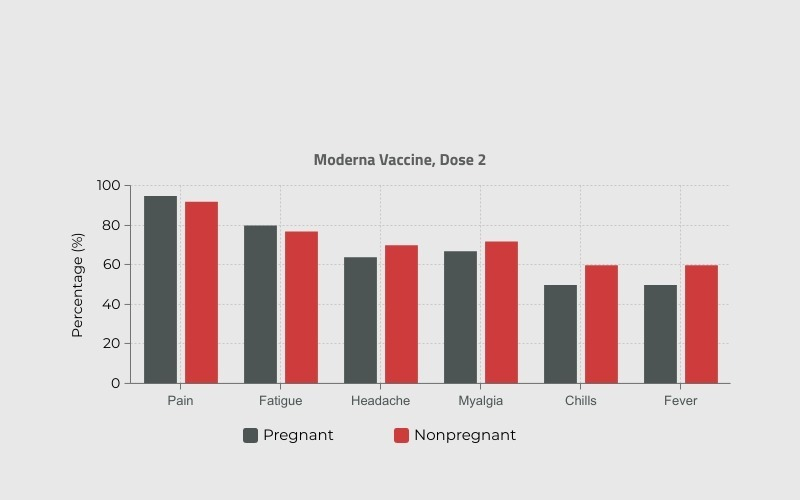
According to preliminary data from the Vaccine Adverse Event Reporting System (VAERS) and the V-safe vaccine registry (previously discussed in the
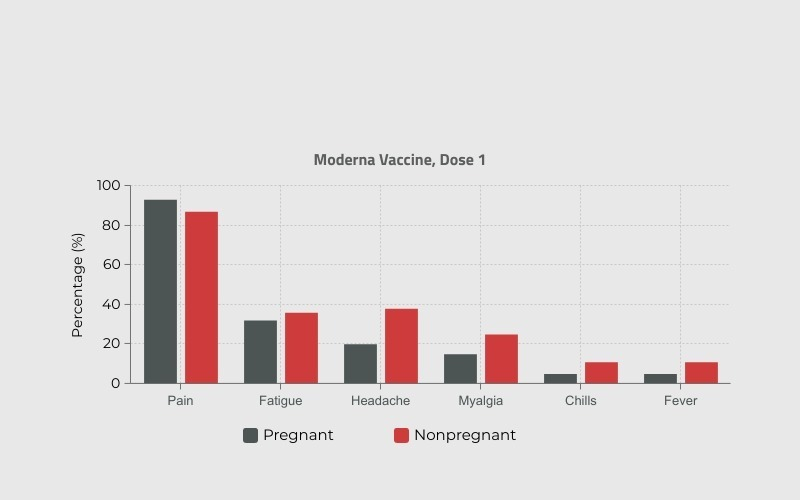
section on Pfizer), injection site pain was more prevalent but other symptoms like myalgia, fever, headache, chills, etc. were reported less frequently in pregnant women. Thus, the reactogenicity profiles were again found to be similar.21
The percentage of adverse pregnancy outcomes also did not deviate from the normal range in these participants when compared to the occurrence of these outcomes in the general public (view the table below) with 12.6% participants reporting spontaneous abortion and 0.1% reporting still birth. The trend holds true for neonatal outcomes as well, with 0% neonatal death, 9.4% of neonates being born preterm, 3.2% of neonates being smaller than their gestational age and 2.2% of neonates showing congenital anomalies.
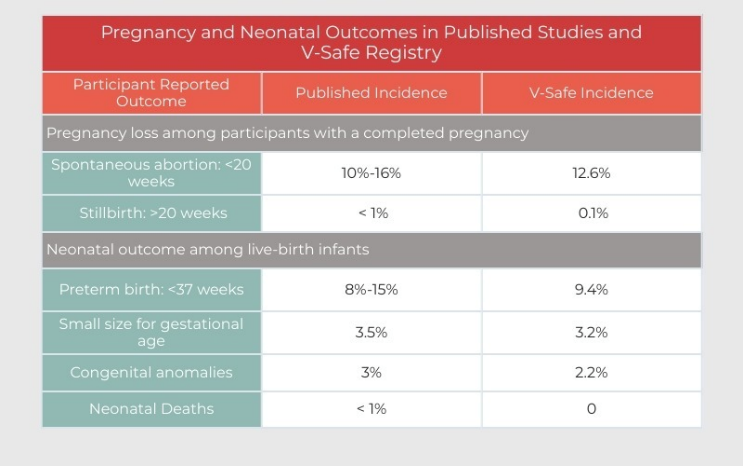
Figure 9 Sinovac IgA levels41
Furthermore, 13 inadvertent pregnancies were reported during Moderna’s vaccine clinical trials. Out of these, 7 individuals were part of the placebo/control group (unvaccinated) and 6 individuals were vaccinated with Moderna. 1 miscarriage (14%) was reported in the control group and no miscarriages were seen in the vaccinated individuals.15, 32
In addition to this, data from the Moderna developmental and reproductive toxicology (DART) studies, which were conducted on animals, found no detrimental effects on fertility, reproduction, miscarriage, fetal and postnatal development.30, 32
A study of lactating women that received mRNA vaccines found COVID-19 antibodies in breastmilk. These IgA and IgG titers were relatively elevated in vaccinated people than in individuals who were naturally infected.33
Baird et al. analyzed breast milk antibody levels of 7 nursing mothers who received mRNA vaccines at 11 time-points after the first dose. Levels of IgG and IgA antibodies were raised roughly 7 days after the initial dose with IgG antibodies showing marked and sustained elevation.34
Inactivated whole virus vaccines:
Sinopharm and CoronaVac (Sinovac): These vaccines operate by triggering an immunologic response in the host using an inactivated COVID-19 virus particle. Vaccines of this sort also make use of an adjuvant which is a substance that increases the immune response of a vaccine when given with an antigen. The adjuvant used is aluminum hydroxide35. Reported efficacy for Sinovac is 50.7%36 and for Sinopharm is 73%35. Both of these percentages are derived from the phase 3 clinical trials.37, 38
Although there have been no human studies that have investigated the safety and potency in the pregnant and lactating population, experiments on animals showed no adverse effects36. Moreover, vaccines that use inactivated viruses, bacteria or toxicoids have been administered to pregnant women for decades and show a good safety profile as they do not harm the fetus or the mother.39
A case report detailing the account of maternal vaccination by CoronaVac in a 34 years old health care worker who completed her vaccine regimen at the gestational age of 32 weeks showed no vaccine related side effects after either dose. 3 weeks after the 2nd dose, her serum contained antibodies with anti receptor binding domains for the SARS-CoV-2 spike protein. She also proceeded to give birth to a healthy full-term girl whose cord-blood was positive for IgG antibodies.40
A study was conducted on 20 nursing mothers with 16 of them being Covid-negative before vaccination. 10 of the participants presented with IgA antibody levels above the seroconversion value (i.e. transition from point of viral infection to the detection of antibodies in blood) at the 7th week. 5 out of these 10 participants showed the same levels even around 4 months after the first dose. Furthermore, none of the breastfed infants showed any adverse effects.41
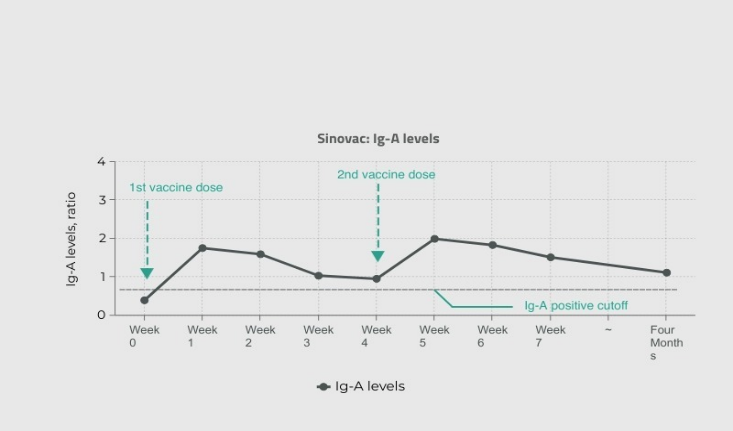
Figure 9 Sinovac IgA levels41
When Sinovac received emergency use authorization in China, 12 vaccine recipients reported pregnancy. 3 of these elected to terminate pregnancy while the remaining 9 reported no adverse effects and all maternal indicators were within the normal range.36
Viral vector vaccines:
AstraZeneca, Janssen-Johnson&Johnson and Sputnik: These use a viral vector which is a modified version of the adenovirus that carries the viral spike protein RNA inside body cells to elicit an immune response. The mechanism is similar to mRNA vaccines but the efficacy is 66%42 and 63.1% for J&J and AstraZeneca respectively.43
Although the drug and reproductive toxicology (DART) studies in animals show no safety concerns43, there have been 28 reported cases of people developing thrombosis following administration of the AstraZeneca vaccine44. These rare but potentially fatal cases of thrombosis alongside thrombocytopenia syndrome (TTS) and intracranial venous sinus thrombosis (IVST) are significant when considering the pregnant population as pregnancy is already a pre-existing risk factor for developing blood clots45.
Therefore, the Joint Committee on Vaccination and Immunization (JCVI) endorsed mRNA vaccines in lieu of the AstraZeneca vaccine (unless one dose has already been administered)39, which is in line with the overall scientific consensus46, 47. This is also supported by robust real-world data from the United States and England where mRNA vaccines were predominantly used and no safety concerns were reported.
The following table shows the number of participants that accidentally got pregnant during the vaccine clinical trials. The miscarriage rates for the J&J and AstraZeneca vaccine were 25% and 17% respectively. Lastly, Sputnik (which has an estimated efficacy of 91.6%48) is inadvisable for use in pregnant or lactating individuals.49, 50
Guidelines for vaccine administration in pregnant and lactating women:
The National Command and Operation Centre (NCOC) of Pakistan has issued vaccine guidelines which highly recommended that pregnant and lactating women receive any of the Covid-19 vaccines available in Pakistan (except J&J which is inaccessible) with AstraZeneca vaccine exclusively being recommended for people 40 years and older51 and the remaining vaccines available for people 18 years and above 18,31,37,38 because these vaccines have proven to be effective and secure after usage in the general public. Sputnik is an exception as it is not recommended and requires guidance from physicians.50
WHO endorsed the administration of Covid vaccines in the population under discussion when the advantages exceed the prospective threats. Physicians should assess whether vaccines would be beneficial and provide the patient with all the necessary details regarding coronavirus, its vaccines and the constraints posed by currently available data. WHO also discourages delaying or terminating pregnancy and lactation due to vaccination.52
The Royal College of Obstetricians and Gynecologists (RCOG) has issued additional guidelines that dictate that Covid-19 vaccines can be received anytime during pregnancy specifically if these women are at a higher risk of contracting Covid infection or experiencing severe illness from Covid-19, including in the first trimester. In low-risk cases, some women may choose to postpone vaccination to after 12 weeks of gestation, citing potential harmful effects of exogenous RNA and vaccine induced fever in the period of organogenesis. Furthermore, women receiving fertility treatment do not need to delay conception in view of vaccination.47
Pregnant and lactating women were omitted from all vaccine clinical trials owing to a historic pattern of exclusion53 and an emphasis on treating even more vulnerable groups of people like those over the age of 50 or immunosuppressed individuals so that the devastating economic and healthcare impacts of the pandemic could be curbed. This justifies why some pregnant women may be apprehensive towards vaccine administration54, 55 but it is imperative for all those that are pregnant or lactating to consult their healthcare provider so that they can be counselled on a case-to-case basis about the advantages and hazards of vaccine administration. It is generally accepted throughout the world that pregnant women should be vaccinated because the benefits tend to outweigh the risks for both mother and child in most scenarios46, 56. Special focus should be placed on the fact that the threat of increasingly dangerous variants of the coronavirus that emerge periodically levy a more serious danger towards the pregnant population and that vaccines are shown to significantly decrease the general rate of hospitalisation and morbidity57. Also, real world data shows that minimal adverse reactions were recorded in pregnant individuals with reactogenicity and immunogenicity profiles being similar in pregnant and non-pregnant women. Fortunately, many governments and private companies are planning to carry out large scale clinical trials for pregnant and lactating women55 so that robust data can be available to alleviate the safety and efficacy concerns that are present currently.
- WHO Director-General’s opening remarks at the media briefing on COVID-19 - 11 March 2020 [Internet]. Who.int. [cited 2021 Sep 13]. Available from: https://www.who.int/director-general/speeches/detail/who-director-general-s-opening-remarks-at-the-media-briefing-on-covid-19---11-march-2020
- WHO Coronavirus (COVID-19) Dashboard [Internet]. Who.int. [cited 2021 Sep 11]. Available from: https://covid19.who.int/
- WHO Coronavirus disease (COVID-19) dashboard with vaccination data [Internet]. Who.int. [cited 2021 Sep 11]. Available from: https://covid19.who.int/region/emro/country/pk
- Imran M, Khan S, Khan S, Uddin A, Khan MS, Ambade P. COVID‐19 situation in Pakistan: A broad overview. Respirology (Carlton, Vic.). 2021 May 31.
- Abid K, Bari YA, Younas M, Tahir Javaid S, Imran A. Progress of COVID-19 Epidemic in Pakistan. Asia Pacific Journal of Public Health. 2020 May;32(4):154-6.
- Ellington S, Strid P, Tong VT, Woodworth K, Galang RR, Zambrano LD, Nahabedian J, Anderson K, Gilboa SM. Characteristics of women of reproductive age with laboratory-confirmed SARS-CoV-2 infection by pregnancy status—United States, January 22–June 7, 2020. Morbidity and Mortality Weekly Report. 2020 Jun 26;69(25):769.
- Delahoy MJ, Whitaker M, O’Halloran A, Chai SJ, Kirley PD, Alden N, Kawasaki B, Meek J, Yousey-Hindes K, Anderson EJ, Openo KP. Characteristics and maternal and birth outcomes of hospitalized pregnant women with laboratory-confirmed COVID-19—COVID-NET, 13 States, March 1–August 22, 2020. Morbidity and Mortality Weekly Report. 2020 Sep 25;69(38):1347.
- Villar J, Ariff S, Gunier RB, Thiruvengadam R, Rauch S, Kholin A, Roggero P, Prefumo F, Do Vale MS, Cardona-Perez JA, Maiz N. Maternal and neonatal morbidity and mortality among pregnant women with and without COVID-19 infection: the INTERCOVID multinational cohort study. JAMA pediatrics. 2021 Apr 22.
- Aziz A, Saleem S, Nolen TL, Pradhan NA, McClure EM, Jessani S, Garces AL, Hibberd PL, Moore JL, Goudar SS, Dhaded SM. Why are the Pakistani maternal, fetal and newborn outcomes so poor compared to other low and middle-income countries?. Reproductive Health. 2020 Dec;17(3):1-2.
- Munir SI, Ahsan A, Iqbal S, Aslam S, Tahira T, Alqai S. Fetomaternal outcome in women with COVID-19 in a COVID designated hospital in Lahore, Pakistan. Biomedica. 2020 Jul 2;36:214-0.
- Rana MS, Usman M, Alam MM, Khalid A, Ikram A, Salman M, Zaidi SS, Faryal R, Qadir M, Umair M, Sufian MM. First trimester miscarriage in a pregnant woman infected with COVID-19 in Pakistan. Journal of Infection. 2021 Jan 1;82(1):e27-8.
- Sarwal Y, Sarwal T, Sarwal R. Prioritizing pregnant women for COVID‐19 vaccination. International Journal of Gynecology & Obstetrics. 2021 May.
- National Command Operation Center. National Command Operation Center [Internet]. Gov.pk. [cited 2021 Sep 11]. Available from: https://ncoc.gov.pk/covid-vaccination-en.php
- Rasmussen SA, Kelley CF, Horton JP, Jamieson DJ. Coronavirus disease 2019 (COVID-19) vaccines and pregnancy: what obstetricians need to know. Obstetrics and gynecology. 2021 Mar;137(3):408.
- Garg I, Shekhar R, Sheikh AB, Pal S. COVID-19 Vaccine in Pregnant and Lactating Women: A Review of Existing Evidence and Practice Guidelines. Infectious Disease Reports. 2021 Sep;13(3):685-99.
- Male V. Are COVID-19 vaccines safe in pregnancy?. Nature Reviews Immunology. 2021 Apr;21(4):200-1.
- Tanne JH. Covid-19: FDA approves Pfizer-BioNTech vaccine in record time.
- Temperature monitoring. Vaccine Storage & Handling [Internet]. Gov.pk. [cited 2021 Sep 11]. Available from: https://ncoc.gov.pk/sop/vac/20210624%20Guidelines%20Pfizer-BioNTech%20Vaccine_7303.pdf
- Gray KJ, Bordt EA, Atyeo C, Deriso E, Akinwunmi B, Young N, Baez AM, Shook LL, Cvrk D, James K, De Guzman R. Coronavirus disease 2019 vaccine response in pregnant and lactating women: a cohort study. American Journal of Obstetrics and Gynecology. 2021 Mar 26.
- Rottenstreich A, Zarbiv G, Oiknine-Djian E, Zigron R, Wolf DG, Porat S. Efficient maternofetal transplacental transfer of anti-SARS-CoV-2 spike antibodies after antenatal SARS-CoV-2 BNT162b2 mRNA vaccination. medRxiv. 2021 Jan 1.
- Shimabukuro TT, Kim SY, Myers TR, Moro PL, Oduyebo T, Panagiotakopoulos L, Marquez PL, Olson CK, Liu R, Chang KT, Ellington SR. Preliminary findings of mRNA Covid-19 vaccine safety in pregnant persons. New England Journal of Medicine. 2021 Jun 17;384(24):2273-82.
- Goldshtein I, Nevo D, Steinberg DM, Rotem RS, Gorfine M, Chodick G, Segal Y. Association between BNT162b2 vaccination and incidence of SARS-CoV-2 infection in pregnant women. Jama. 2021 Jul 12;326(8):728-35.
- Lasky T, McMahon AW, Hua W, Forshee R. Methodologic approaches in studies using real-world data (RWD) to measure pediatric safety and effectiveness of vaccines administered to pregnant women: A scoping review. Vaccine. 2021 Jun 2.
- Golan Y, Prahl M, Cassidy A, Lin CY, Ahituv N, Flaherman VJ, Gaw SL. COVID-19 mRNA vaccine is not detected in human milk. medRxiv. 2021 Jan 1.
- Golan Y, Prahl M, Cassidy AG, Gay C, Wu AH, Jigmeddagva U, Lin CY, Gonzalez VJ, Basilio E, Warrier L, Buarpung S. COVID-19 mRNA Vaccination in Lactation: Assessment of adverse effects and transfer of anti-SARS-CoV2 antibodies from mother to child. medRxiv. 2021 Aug 3.
- Perl SH, Uzan-Yulzari A, Klainer H, Asiskovich L, Youngster M, Rinott E, Youngster I. SARS-CoV-2–Specific Antibodies in Breast Milk After COVID-19 Vaccination of Breastfeeding Women. Jama. 2021 May 18;325(19):2013-4.
- Jakuszko K, Kościelska-Kasprzak K, Żabińska M, Bartoszek D, Poznański P, Rukasz D, Kłak R, Królak-Olejnik B, Krajewska M. Immune Response to Vaccination against COVID-19 in Breastfeeding Health Workers. Vaccines. 2021 Jun;9(6):663.
- Guida M, Terracciano D, Cennamo M, Aiello F, La Civita E, Esposito G, Gargiulo V, Maruotti GM, Portella G, Sarno L. COVID-19 Vaccine mRNABNT162b2 Elicits Human Antibody Response in Milk of Breastfeeding Women. Vaccines. 2021 Jul;9(7):785.
- Schwartz A, Nir O, Toussia-Cohen S, Leibovich L, Strauss T, Asraf K, Doolman R, Sharabi S, Cohen C, Levin EG, Lustig Y. Presence of SARS-CoV-2 antibodies in lactating women and their infants following BNT162b2 messenger RNA vaccine. American Journal of Obstetrics & Gynecology. 2021 Aug 2.
- World Health Organization. Interim recommendations for use of the Moderna mRNA-1273 vaccine against COVID-19: interim guidance, first issued 25 January 2021, updated 15 June 2021. World Health Organization; 2021.
- Gov.pk. [cited 2021 Sep 11]. Available from: https://ncoc.gov.pk/sop/vac/20210804%20Guidelines%20for%20Moderna%20Vaccine_7404.pdf
- World Health Organization. mRNA-1273 vaccine (Moderna) against COVID-19 background document: draft prepared by the Strategic Advisory Group of Experts (SAGE) on Immunization Working Group on COVID-19 vaccines, 19 January 2021. World Health Organization; 2021.
- Collier AR, McMahan K, Yu J, Tostanoski LH, Aguayo R, Ansel J, Chandrashekar A, Patel S, Apraku Bondzie E, Sellers D, Barrett J. Immunogenicity of COVID-19 mRNA vaccines in pregnant and lactating women. Jama. 2021:2370-80.
- Baird JK, Jensen SM, Urba W, Fox BA, Baird JR. SARS-CoV-2 antibodies detected in human breast milk postvaccination. MedRxiv. 2021.
- World Health Organization. Fact sheet for health workers: Beijing Institute of Biological Products Co., Ltd.(BIBP) COVID-19 Vaccine, by China National Biotec Group (CNBG), Sinopharm (international non-proprietary name: Covilo; BIBP-CorV). World Health Organization. Regional Office for Europe; 2021.
- World Health Organization. Background document on the inactivated vaccine Sinovac-CoronaVac against COVID-19: background document to the WHO interim recommendations for use of the inactivated COVID-19 vaccine, CoronaVac, developed by Sinovac, 24 May 2021. World Health Organization; 2021.
- Gov.pk. [cited 2021 Sep 11]. Available from: https://ncoc.gov.pk/sop/89.%2020210503%20Guidelines%20for%20Sinopharm%20Vaccine%20_5704.pdf
- Gov.pk. [cited 2021 Sep 11]. Available from: https://ncoc.gov.pk/sop/vac/20210620%20Guidelines%20for%20Sinovac%20Vaccine_6303.pdf
- Loong YH, Choo OP, San PY, Rabi RA, Arumugam S. COVID-19 VACCINATION AND PREGNANCY: A PATIENT’S DILEMMA. Asian Journal of Medicine and Health Sciences Vol. 2021 Jun;4(1):142.
- Soysal A, Bilazer C, Gönüllü E, Barın E, Çivilibal M. Cord blood antibody following maternal SARS-CoV-2 inactive vaccine (CoronaVac) administration during the pregnancy. Human Vaccines & Immunotherapeutics. 2021 Jul 12:1-3.
- Calil VMLT, Palmeira P, Zheng Y, et al. CoronaVac can induce the production of anti-SARS-CoV-2 IgA antibodies in human milk. Clinics (Sao Paulo). 2021;76:e3185.
- Office of the Commissioner. FDA issues emergency use authorization for third COVID-19 vaccine [Internet]. Fda.gov. 2021 [cited 2021 Sep 11]. Available from: https://www.fda.gov/news-events/press-announcements/fda-issues-emergency-use-authorization-third-covid-19-vaccine
- World Health Organization. Background document on the AZD1222 vaccine against COVID-19 developed by Oxford University and AstraZeneca: background document to the WHO Interim recommendations for use of the AZD1222 (ChAdOx1-S [recombinant]) vaccine against COVID19 developed by Oxford University and AstraZeneca, 1 March 2021. World Health Organization; 2021.
- Tobaiqy M, Elkout H, MacLure K. Analysis of Thrombotic Adverse Reactions of COVID-19 AstraZeneca Vaccine Reported to EudraVigilance Database. Vaccines. 2021 Apr;9(4):393.
- Wolf ME, Luz B, Niehaus L, Bhogal P, Bäzner H, Henkes H. Thrombocytopenia and intracranial venous sinus thrombosis after “COVID-19 vaccine AstraZeneca” exposure. Journal of Clinical Medicine. 2021 Jan;10(8):1599.
- Jamieson MD, Hughes BL, Swamy G, O’Neal L, Eckert MD, Turrentine M, Carroll S. COVID-19 Vaccination Considerations for Obstetric–Gynecologic Care.
- Org.uk. [cited 2021 Sep 11]. Available from: https://www.rcog.org.uk/globalassets/documents/guidelines/2021-06-30-coronavirus-covid-19-vaccination-in-pregnancy.pdf
- Sputnik V vaccine - efficacy, doses, side effects and price [Internet]. Pacehospital.com. 2021 [cited 2021 Sep 11]. Available from: https://www.pacehospital.com/sputnik-v-vaccine-efficacy-doses-side-effects-and-price
- Ghiasi N, Valizadeh R, Arabsorkhi M, Hoseyni TS, Esfandiari K, Sadighpour T, Jahantigh HR. Efficacy and side effects of Sputnik V, Sinopharm and AstraZeneca vaccines to stop COVID-19; a review and discussion.
- To be used immediately after. Instructions for Use: [Internet]. Gov.pk. [cited 2021 Sep 11]. Available from: https://ncoc.gov.pk/sop/vac/20210503%20Guidelines%20for%20Sputnik%20V%20Vaccine_6102.pdf
- Gov.pk. [cited 2021 Sep 11]. Available from: https://ncoc.gov.pk/sop/104.%2020210615%20Guidelines%20for%20AstraZeneca%20Vaccine_7104.pdf
- Goodman T. Update on WHO Interim recommendations on COVID-19 vaccination of pregnant and lactating women [Internet]. Who.int. [cited 2021 Sep 11]. Available from: https://cdn.who.int/media/docs/default-source/2021-dha-docs/update-on-who-interim-recommendations-on-c-19-vaccination-for-pregnant-and-lactating-women-70-.pdf?sfvrsn=2c1d9ac8_1&download=true
- Van Spall HG. Exclusion of pregnant and lactating women from COVID-19 vaccine trials: a missed opportunity. European Heart Journal. 2021 Mar 4.
- Rubin R. Pregnant people’s paradox—excluded from vaccine trials despite having a higher risk of COVID-19 complications. JAMA. 2021 Mar 16;325(11):1027-8.
- Razzaghi H, Meghani M, Pingali C, Crane B, Naleway A, Weintraub E, Kenigsberg TY, Lamias MJ, Irving SA, Kauffman TL, Vesco KK. COVID-19 Vaccination Coverage Among Pregnant Women During Pregnancy—Eight Integrated Health Care Organizations, United States, December 14, 2020–May 8, 2021. Morbidity and Mortality Weekly Report. 2021 Jun 18;70(24):895.
- Chavan M, Qureshi H, Karnati S, Kollikonda S. COVID-19 Vaccination in Pregnancy: The Benefits Outweigh the Risks. Journal of Obstetrics and Gynaecology Canada. 2021 Jul;43(7):814.
- Borchering RK, Viboud C, Howerton E, Smith CP, Truelove S, Runge MC, Reich NG, Contamin L, Levander J, Salerno J, van Panhuis W. Modeling of future COVID-19 cases, hospitalizations, and deaths, by vaccination rates and nonpharmaceutical intervention scenarios—United States, April–September 2021. Morbidity and Mortality Weekly Report. 2021 May 14;70(19):719.

Volume 3
2021
An Official Publication of Student Spectrum at
Islamabad Medical & Dental College